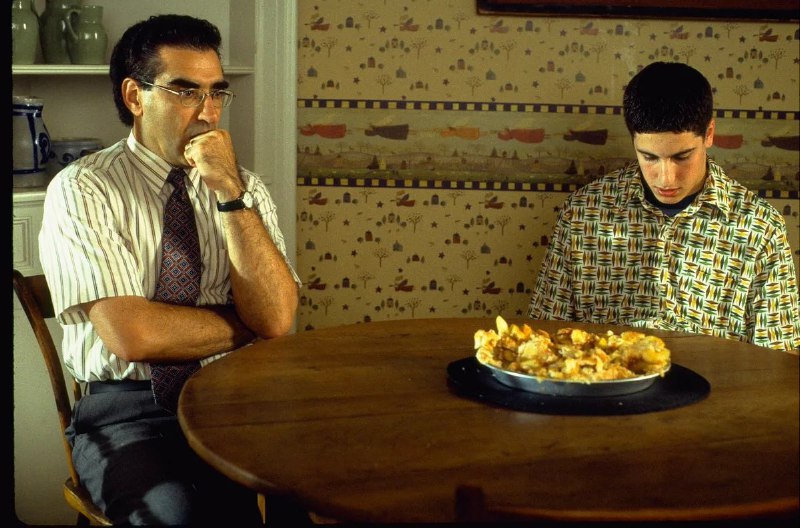
But today, the sexual behavior of educated youth in the United States is anything but rap orgies and American Pie jokes.
There are dozens of articles about how implausible the world of Sex and the City is. And yet, for many fans, the show remains the bible of American dating culture. But today, relying on the wisdom of Carrie Bradshaw and her friends is not just useless—it’s downright harmful.
It’s not just that newspaper column fees can’t support a collection of “blanks,” and that living conditions in Manhattan are a far cry from the spacious, clean, and modern apartments where the heroines have sex with muscular (and almost always white) men. It’s not even that real New Yorkers are often physically exhausted by surviving in an expensive and unfriendly city: they don’t have the energy to date, choose a partner, or commit to a committed relationship that meets more than once a week.
The main thing is that the series, which claimed to be a feminist voice in the form of four women who prioritized their careers over their families, now seems chauvinistic and outdated. This was demonstrated by the recent #wokecharlotte meme: its creators put into the mouth of the prim WASP Charlotte York comments that a feminist from 2018 would have made in response to jokes like, “Bisexuality is a stopover on the way to Gaytown.”
And over the past 15 years, Americans have finally learned what seems so difficult for those soap opera heroines who hesitate for weeks to tell their partners they don’t like oral sex or their dates with other women. They’ve learned to talk.
Before sex
Imagine you had a date today. Chances are, at least your second, and it was certainly a success. Your date offers you a ride home. In response, you suggest stopping for tea. Half an hour later, you’re lying on your bed, and then things take an unexpected turn. They look you in the eye and ask in a calm, casual tone, “Do you want to make out ?” It was an inappropriate proposition, and if you truly want to have sex, you need to answer this question, which can be so discouraging to a Russian, with a resounding “I do.” Otherwise, the other person will have to get dressed and leave quickly. After all, they’re not your rapist.
A prerequisite for sex-positive behavior, that is, an attitude toward sex as a healthy and non-shameful pleasure in its most diverse forms, is that contacts must be safe and based on sexual consent .
Everything needs to be agreed upon: from the first kiss to any experiments that could potentially cause discomfort to the partner (or partners).
People talk a lot before, during, and after sex, and there’s no room for “no means yes” flirtatiousness in those conversations.
Dating is as much a part of a young American’s life as studying, working, or playing football on Tuesdays. If they haven’t yet found or aren’t even looking for a long-term partner, they spend time on Tinder and its alternatives or, much less frequently, search for potential dates among their social circle.
On dating apps, Americans often state their intentions clearly. For example, if they’re looking for a one-night stand, they’ll write, “Just looking for hookups .” If they’re looking for casual sex without commitment, they’ll say, “Not currently seeking anything serious.” If they’re genuinely interested in a relationship, they might be more elaborate, like, “I want someone to inspire me.”
It is also customary to communicate sexual preferences immediately.
The general term “kink” refers to any “non-vanilla” behavior, whether it’s dress-up play or spanking a partner. Of course, a person can also specify their “very specific” tastes: for example, by revealing that they’re a cuckold (enjoying their partner’s infidelity) or a furry (dressing up in animal costumes, not least in a sexual context). Any particular sexual behavior is considered normal as long as it doesn’t threaten the well-being of others, so it’s not customary to roll your eyes at such confessions.
Sexual orientation in America (and throughout the Western world) is seen as a spectrum, where, in addition to openly heterosexual individuals ( straight ), there is a broad spectrum of those who might be called queer . This term is used as a self-definition by anyone who dislikes conventional labels like gay , lesbian , or bisexual —there are far more nuances to sexual behavior than the idea that the world is only about men with penises, women with vaginas, and limited interactions between them allows.
The term “genderqueer” encompasses anyone whose gender identity differs from cisgender male/female , who identifies with their biological sex. For example, a gender fluid person’s sense of self changes over time, while an agender person doesn’t identify with any gender at all.
There are many ways for people with different identities to interact: it’s not unusual for a cisgender heterosexual man to seek a relationship with a queer woman. He just prefers it that way.
In America, open relationships with one partner, even including open marriage , and polyamory—relationships with multiple partners—are becoming the social norm. On Tinder, people explicitly describe themselves as open or poly (a good example of the American penchant for abbreviations). Sometimes, in such a profile, you’ll find a story about a relationship the person is already in. Some post for two people at once, for example, looking for a unicorn —a bisexual woman interested in sex with heterosexual couples.
If you date a polyamorous person, you may discover the complex hierarchy of their romantic life, but don’t be too quick to laugh at statements like “I’m not my girlfriend’s primary boyfriend , and I like it.” Yes, behind their backs, monogamous Americans themselves like to make fun of polyamorous people, claiming they’ve created a sophisticated theory for what people have always done and are simply afraid of intimacy. But openly demonstrating to someone that you don’t respect their sexual strategy is rude and outdated.
After sex
Americans are individualists and care no more about their partner’s comfort than their own. Just because a date ends in sex doesn’t mean you have to fall asleep cuddling. If the encounter is on your own property, your partner will ask if they can stay. If you’re the guest and haven’t been explicitly invited to spend the night, it’s worth asking, “Is it okay with you if I stay?”
Of course, spending a night together is often seen as a sign of a budding emotional connection. If a friend tells you that after last night’s date, one of you stayed over , you can congratulate them—they’re hoping for a continuation of the relationship. But at the same time, if you liked someone and after sex they decide to leave or send you home, don’t be upset. It’s quite possible they have to get up early and want to get some sleep in their own bed. Typical American pragmatism.
When your relationship goes beyond a few dates and regular sex and you’ve already heard the simple American confession “ I really like you”/“I’m really into you, ” the crucial moment comes – it’s time to make a commitment .
Just because you’re dating doesn’t officially limit your partner and you from going on dates and having sex with other people until you have a conversation about being exclusive.
If after morning sex you’re suddenly solemnly told “I don’t have other girlfriends/boyfriends,” the last thing you should do is ask with a long face who they’ve “cheated” on you with. This is a serious admission, so smile and prepare to enter into a real relationship. Now you’ll be tested for compatibility , because emotional connection and good sex are as important in America as being willing to homeschool your children in the distant future and being able to get along with your partner’s family when you visit them for Thanksgiving.
Be prepared to quickly move into the planning phase, as since you’ve been chosen from among many, your partner will need to adjust their schedule of get-togethers with friends and family celebrations to reflect their new status. This doesn’t necessarily mean engagement is imminent—it’s just that same old American pragmatism.
American relationships often end abruptly and not always gracefully. In their quest to figure themselves out, get back on their feet, and find their perfect partner, Americans sometimes simply lack the emotional strength to explain themselves to their partner and silently disappear from their lives. Ghosting is a phenomenon that, in the internet age, is widespread far beyond America, but in the States, it’s ubiquitous.
People have learned to talk about sex easily and calmly, but when it comes to explaining complex feelings, words are often at a loss, and they simply stop answering calls and messages.
If a serious breakup conversation does occur, the American equivalent of the Russian cliché, “It’s not you, it’s me,” is “I’m not emotionally available right now.” In reality, of course, this often means a person has lost interest in a particular partner, but it’s common to justify a breakup by citing a desire to improve one’s emotional life. If your “emotionally unavailable” ex updates their Tinder profile a couple of days later, just smile and swipe left this time. The road is mastered by the one who walks it.
Leave a Reply